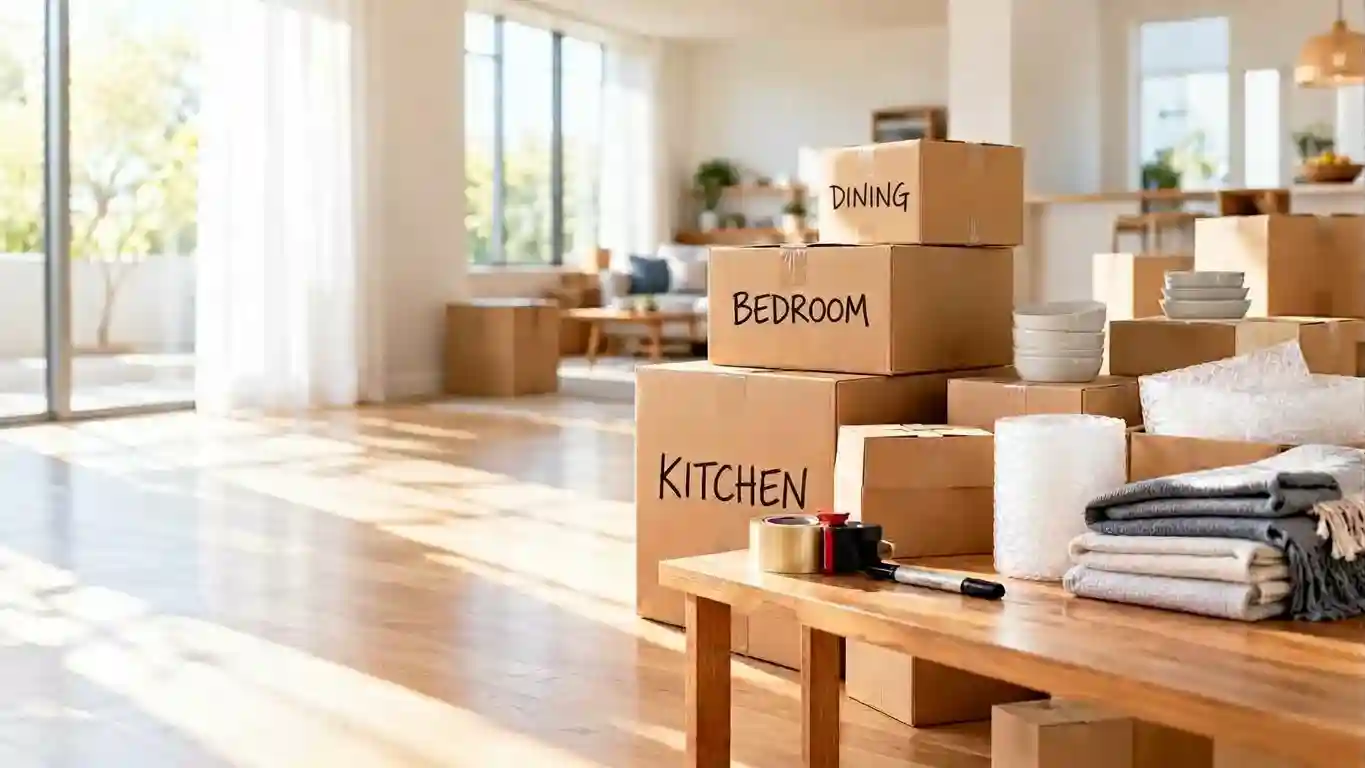
Estimate how many moving boxes you need.
Get a practical box estimate based on your home size, amount of belongings, and storage. Use it as a planning guide before you start packing.
Plan your boxes before you start packing.
Choose your home size, how much you have, and whether you have extra storage. MoverDude will build a practical planning estimate and box-type breakdown.
Tell us what you're packing.
No contact information is needed to calculate an estimate.
Start with your move details.
Actual needs vary by room mix, books, kitchenware, closets, décor, garage/storage contents, and reusable bins.
MoverDude starts with a home-size planning baseline, adjusts it for your amount of belongings and storage, then builds a likely range around the result.
Model: box-v1.0Why box planning matters.
A better box estimate gives you a clearer packing plan before moving day. The goal isn't to predict an exact number — it's to help you prepare for the amount and types of boxes your move may need.
Stay organized
Plan your box mix before packing so rooms, containers, and supplies are easier to manage.
Avoid overbuying
A planning range gives you a more useful starting point than buying a random stack of boxes.
Match boxes to belongings
Smaller, heavier items and larger lightweight belongings usually benefit from different box sizes.
Reduce last-minute scrambling
Knowing your likely box count early makes it easier to gather supplies before packing gets busy.
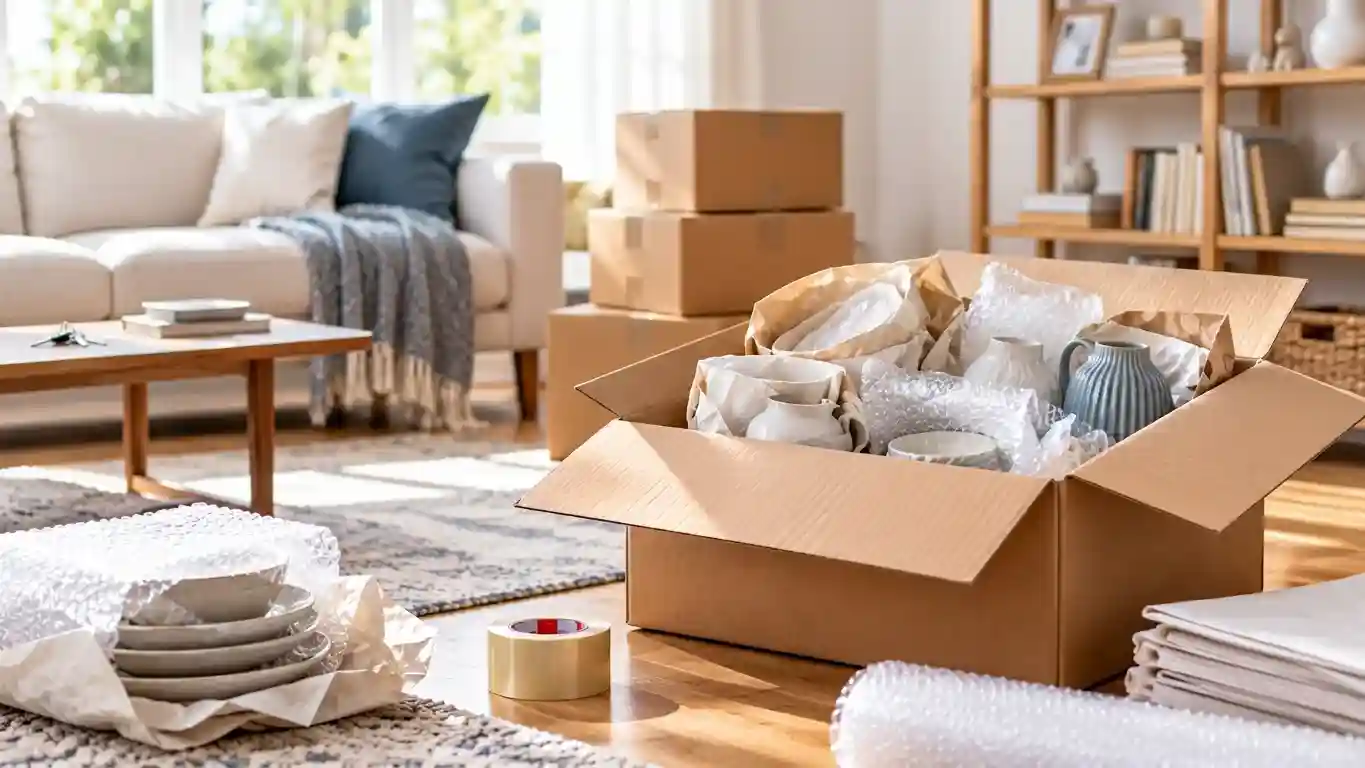
Common box types and what they're best for.
Box size matters because heavier items usually work better in smaller containers, while lightweight bulky items can make better use of larger boxes.
Small Moving Box
A smart choice for compact, heavier belongings that become difficult to carry in a larger container.
- Books
- Canned or pantry goods
- Small appliances
- Toiletries
Keep dense items in smaller boxes so the finished box stays easier to lift. Fill empty spaces so contents cannot shift around during handling.
Medium Moving Box
The general-purpose workhorse for many everyday household belongings.
- Kitchen items
- Décor
- Toys and games
- Folded clothing
Medium boxes work well for mixed household goods. Avoid loading too many dense items into one box just because there is still physical space available.
Large Moving Box
Better suited to larger belongings that take up space without becoming excessively heavy.
- Bedding
- Pillows
- Linens
- Lightweight bulky items
Large boxes can become difficult to handle quickly. Reserve them for lighter items rather than filling them with books, canned food, or other dense belongings.
Wardrobe Box
Designed for clothing that is easier to move while it remains hanging.
- Coats
- Dresses
- Suits
- Hanging shirts
Move clothing directly from the closet onto the wardrobe bar. Use the lower portion only for lightweight items so garments are not crushed.
Dish Pack Box
Useful when fragile kitchen and dining pieces need more separation and cushioning.
- Plates and bowls
- Glassware
- Mugs
- Fragile kitchen items
Wrap fragile pieces individually and use dividers or cushioning where appropriate. Fill open space so pieces are less likely to move against each other.
More tools to help you plan your move.
Use these tools to stay organized, understand what you're moving, and build a clearer plan before moving day.
Questions about planning your moving boxes.
Quick answers about box estimates, box sizes, fragile items, storage, and how to use your result as a practical packing guide.
The calculator provides a planning estimate, not an exact box requirement. Your actual needs can vary based on room mix, books, kitchenware, closets, décor, storage areas, reusable bins, and how tightly you pack.
Use the amount-of-belongings setting to adjust the estimate. Choose Light for a more minimal or decluttered home, Average for a typical furnished home, or Full for fuller rooms, closets, books, and décor.
Some fragile items benefit from specialty boxes, dividers, wrapping, or additional cushioning. Dishes, glassware, artwork, electronics, and unusually shaped items may need more protection than a standard general-purpose box provides.
Smaller boxes are generally easier to manage for dense belongings such as books, canned goods, and small appliances. Large boxes are usually better reserved for lighter bulky items such as bedding, pillows, and linens.
The calculator already shows a likely range because households vary. Use that range as a planning guide and consider whether your closets, kitchen, books, garage, or storage areas are heavier than the selections you entered.
Yes, when you account for them with the Additional Storage setting. Choose Some or Heavy if you have meaningful belongings stored in a garage, basement, attic, storage room, or similar area.
Box smarter. Move with a clearer plan.
Use your box estimate as one part of the bigger move. Keep planning your inventory, checklist, timing, and moving options with MoverDude.